Why Pharmaceutical Companies Use Isomalt in Tablets and Syrups
Learn why pharma companies choose isomalt (E953) for tablets, lozenges and syrups: low GI, stability, mild sweetness, and the right grade.
Patients today expect medicines that are easier to take, pleasant to taste and kinder to their health. For pharmaceutical teams, that means rethinking even the "inactive" parts of a formula. Sugar was once the default bulking and sweetening agent in lozenges, chewables and syrups, but it brings a high glycaemic load, extra calories and a risk to dental health. Isomalt has become a widely used alternative because it solves these problems without making formulation harder.
For many formulators, isomalt is a default excipient: its fine and powder grades flow cleanly, stay stable in storage, and carry a glycaemic index of 9 into sugar-free and diabetic friendly claims. This guide explains what isomalt is, which properties matter in pharmaceutical use, how it performs in syrups, why isomalt for tablets and lozenges is so widely used, and what to check when choosing a grade and a supplier.
What Is Isomalt?
Isomalt (E953) is a sugar substitute made from sucrose. It is produced through enzymatic isomerisation, hydrogenation, and refining, which is why it is not classed as an artificial sweetener. It appears as a white or almost white crystalline powder or granules, is odourless and has a mild, clean sweetness. Food-grade isomalt is FSSAI-approved in India.
Chemically, it is a mixture of two components, GPM and GPS, with a typical assay of 98.0% or higher. That purity and consistency are a large part of why formulators trust it as an excipient.
Key Properties That Matter in Pharmaceutical Use
Low hygroscopicity and storage stability
Moisture is one of the biggest threats to tablet and lozenge quality. Isomalt has low hygroscopicity, so it does not readily pull water from the air. It is stable under normal temperatures and pressures and has a shelf life of 24 months when stored tightly closed in a dry, cool, well-ventilated place. For manufacturers, that means fewer stability surprises and more predictable batches.
Clean powder flow
Fine and powder grades flow cleanly, which supports consistent die filling and dry blending. This is why isomalt is a common choice in direct-compression tablets and sachet blends.
Mild sweetness that helps taste masking
Isomalt is about half as sweet as sucrose. In pharma this is often an advantage. It provides bulk and a pleasant mouthfeel without an overpowering sweet note, leaving room for flavours and masking agents to do their job in bitter-tasting actives.
Low glycaemic index and lower calories
Isomalt has a glycaemic index of 9, compared with 65 for sucrose, and provides about 2 kcal/g against 4 kcal/g for sugar. This supports sugar-free and diabetic friendly claims, particularly for long-term or daily-use products.
Tooth-friendly
Unlike sugar, isomalt is non-cariogenic. For lozenges, chewables and syrups that stay in the mouth or are taken regularly, this is a meaningful benefit.
Chemical and heat stability
Isomalt melts at 145 to 150 °C and is stable when exposed to heat. That tolerance suits processes that involve warming, and it contributes to consistent results from batch to batch.
Use in Tablets and Lozenges
Isomalt is used as a filler, binder and sweetening base across several solid dosage forms:
- Direct-compression tablets, where free-flowing powder grades simplify the process
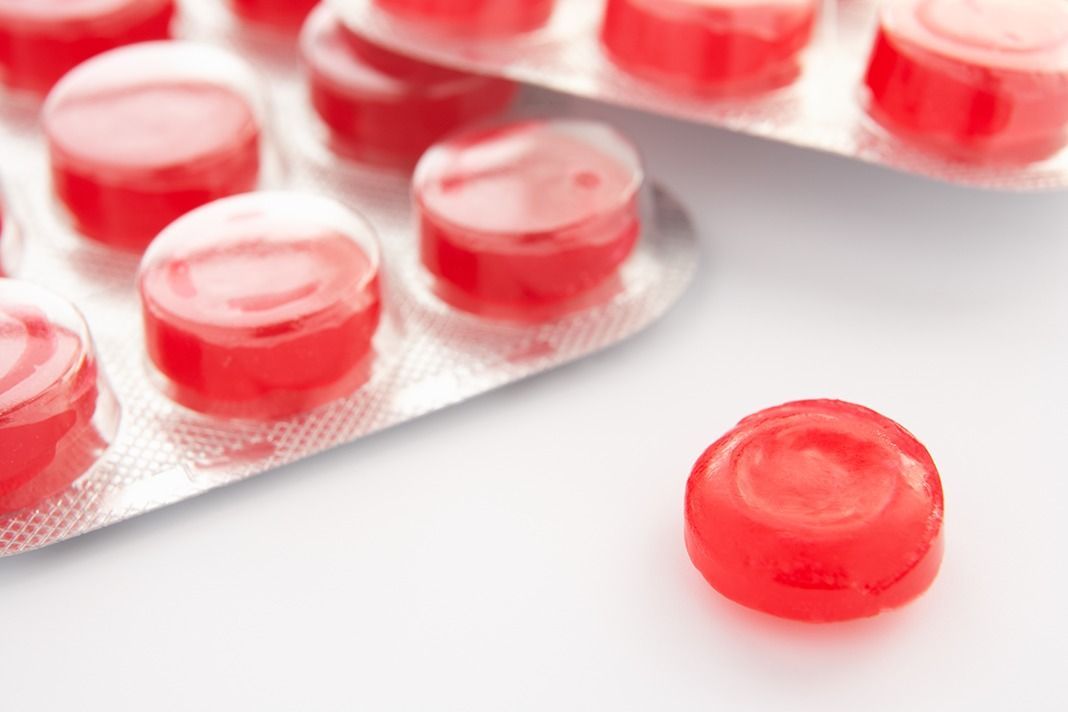
- Lozenges, where isomalt provides body, smooth dissolution in the mouth and a tooth-friendly profile
- Chewables, where mild sweetness and good mouthfeel improve patient acceptance
- Sachet and dry blends, where low moisture uptake protects stability
Formulators favour a low-moisture, stable base because it protects moisture-sensitive actives and reduces the risk of caking, sticking or changes in hardness during storage. Isomalt's stability on the shelf makes it a dependable choice for products that sit in warehouses and pharmacies for months.
Use in Syrups and Liquid Formats
Sugar-free syrups face a familiar challenge: removing sugar usually removes body. Isomalt helps by delivering a sucrose-like mouthfeel without the sugar load. It is easily soluble in cold water, which makes it practical for syrups, ready mixes and powders that are reconstituted before use.
Because its sweetness is mild, it pairs well with flavour systems and, where needed, with other sweeteners to reach a target taste profile. For paediatric and geriatric products, where palatability decides whether a medicine is taken at all, this flexibility is valuable.
Typical Performance Values for the Bench
For the 80 and 150 mesh grades, these are the typical values formulators use when planning a trial. Batch COAs and full specification sheets should always be checked before scale-up.
Two points stand out for pharma teams. First, the low reducing sugar content (0.3% or less) leaves little to react with sensitive actives. Second, the mild, cooling sweetness has no aftertaste, which matters for lozenges, chewables and syrups where patient compliance depends on taste.
Formulation Notes: Getting the First Batch Right
Isomalt suits direct-compression tablets, lozenges, chewable tablets, cough syrups and coated tablets. These starting points help avoid common trial-batch mistakes.
- Direct compression: Blend the 80 or 150 mesh grade with 0.5 to 1% magnesium stearate and the active. No granulation step is needed.
- Lozenges: Cook isomalt to 160 to 165 °C, add the active and flavour below 120 °C, then deposit into moulds. Adding heat-sensitive actives late protects them from degradation.
- Syrups: Isomalt gives body without crystallisation risk. Keep the concentration below 25% w/v at storage temperature.
Treat these as starting points, then adjust for your own active, equipment and storage conditions.
Choosing the Right Isomalt Grade
Isomalt is available in different mesh sizes, and the right grade depends on the application:
- 30 mesh (crystal grade): Designed for confectionery processes such as hard-boiled candy and casting. It is not recommended for pharmaceutical use.
- 80 mesh (fine grade): Suited to direct compression, dry blends and powder mixes.
- 150 mesh (powder grade): Suited to pharmaceutical tablets, lozenges and fine dry blends.
For pharmaceutical applications, use the 80 and 150 mesh grades. Always run a trial batch on your own equipment to confirm flow, compressibility and taste in your specific formula. You can read more about the available cuts on the isomalt grades page.
What to Look For in an Isomalt Supplier
Excipient quality is a regulatory matter as much as a technical one. When qualifying a supplier, ask for a specification sheet, certificate of analysis (COA), safety data sheet (MSDS) and stability data for every lot. Typical specification values for pharmaceutical-suitable isomalt include:
- Assay (GPM + GPS): 98.0% or higher
- Sorbitol and mannitol: 2.0% or less
- Reducing sugar (as glucose): 0.3% or less
- Loss on drying: 7.0% or less
- Residue on ignition: 0.1% or less
Full traceability, consistent lot-to-lot quality and reliable bulk supply matter just as much as the numbers themselves. Documentation should be ready for your QA and regulatory files before the first order is placed. Technical documents are available in the TDS, COA and certificates section.
For more background, see what isomalt is, whether isomalt is safe, and isomalt as a direct-compression excipient.
Frequently asked questions
Is isomalt suitable for pharmaceutical formulations?
Yes. Its stability, mild sweetness and non-cariogenic profile make it a widely used excipient in tablets, lozenges and syrups. For pharmaceutical use, the 80 and 150 mesh grades are recommended.
Which isomalt grade should I use for tablets?
The 80 mesh fine grade and the 150 mesh powder grade are the right choices for direct compression, lozenges and fine dry blends. The 30 mesh crystal grade is intended for confectionery.
Is isomalt natural or artificial?
Isomalt is produced from sucrose through enzymatic isomerisation, hydrogenation and refining. It is not a synthetic artificial sweetener and is considered a clean-label alternative.
What is the shelf life of isomalt and how should it be stored?
Isomalt has a shelf life of 24 months. Keep the container tightly closed in a dry, cool and well-ventilated place.
Is documentation available for regulatory compliance?
Yes. Specification sheets, COA, MSDS and stability data should be available from your supplier for every lot, ready for QA and FSSAI files.
About Isomalt India
Isomalt India is the exclusive India partnership between JJD Group and NewTrend Group, bringing FSSAI-approved isomalt to food, pharma, and confectionery manufacturers across the country. Manufacturers can request free samples with 48-hour dispatch, order in 25 kg bags from trial quantities to full container loads, and work directly with a technical team through supply that goes straight from manufacturer to manufacturer.
Conclusion
Isomalt gives pharmaceutical formulators a practical way to move away from sugar. It combines low hygroscopicity, clean flow, mild sweetness, a glycaemic index of 9 that carries into sugar free and diabetic friendly claims, and tooth-friendly behaviour in one stable, well-documented ingredient. Whether the target is a direct-compression tablet, a lozenge or a sugar-free syrup, the right grade and a qualified supplier make the difference between a smooth scale-up and a stalled project. Request a sample and run a trial batch on your line.
Related application: Pharmaceutical
Request a Sample